
Go. Conceive and Deliver Art
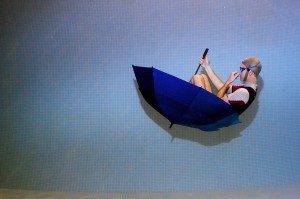
More beautiful art conceived and delivered at http://www.heatherperryphoto.com/
In 1943, Richard James was a naval engineer trying to develop a meter designed to monitor horsepower on naval battleships. Richard was working with different types of tension springs when one of the springs fell to the ground. And after it fell to the ground, it kept moving as if stepping away. Astonished and delighted by the odd movement, he immediately thought this would make a fun toy for a child. He had just discovered the slinky.
Swiss chemist Jacques E. Brandenberger was sitting at a restaurant one day in 1900 when he watched a glass of wine spill and seep slowly into the tablecloth. His thought in the moment was: wouldn’t it be better to have a kind of coating to the cloth that would prevent absorption, so it would be easy to clean up. He spent the next ten years of his life working on this side project to invent what is now called cellophane.
Some cool innovations are recognized immediately, while others are conceptualized and take years of persistence of realize. Yet there are two primary ingredients that pervade accidental innovation: Curiosity and Play.
Or to put it another way, these were non-commissioned works by an artist.
Almost twenty years ago, Harvard Business School professor Teresa Amabile and her colleagues conducted an interesting study. They asked 23 artists to randomly select 10 of their commissioned works and 10 of their non-commissioned works. They then took the 460 works of art to a space where they could be evaluated by a team of art curators, historians, and experts – all of whom had not been told which was commissioned (paid) art, and which art was created at the self-direction and initiation of the artist
Amabile and her colleagues reported:
“Our results were quite startling…the commissioned works were rated as significantly less creative than the non-commissioned works, yet they were not rated as different in technical quality.”
In other words, it was the non-commissioned, self-directed art that was found to be more creative, interesting, and valuable. Go, conceive and create, undirected, non-commissioned work.
 In the wake of hurricane Katrina, numerous people throughout the gulf coast area had lost homes, and were in need of basic food, shelter and care. With sporadic electricity available in the region, cash became critical to sustaining people’s lives.
 It never really occured to me. It didn’t occur to my wife. Candy never thought of it either. The morning when Annie and I got in the car, it did cross my mind, but only briefly enough to send a quick text to Candy asking, “Do you think it’s OK if I bring Annie?” It never seemed such a concern that I should call in advance or question it. Although alas, that decision changed the day.
 First ask yourself, “Do I behave with high integrity?” The majority of us would respond that yes, we do.
 I met a guy named Marcus who was based in Germany and ran an IT services group, which was based in Silicon Valley. Several times a year Marcus would fly to California to spend time with his team, chatting, having meals, talking about work, but also interacting on a human and personal level. He calls these trips “The Flying Handshake.”
 Next time you’re standing at the gate waiting to get on a flight and the crew shows up, watch how they interact with each other. It will tell you a lot about how effective as a team they are going to be up in the sky shortly.
 The Mayan weren’t the only ones to predict the end of the world. Or rather I should say, those who interpreted the Mayan to have predicted the end of the world aren’t the only ones who have predicted the end of the world.